
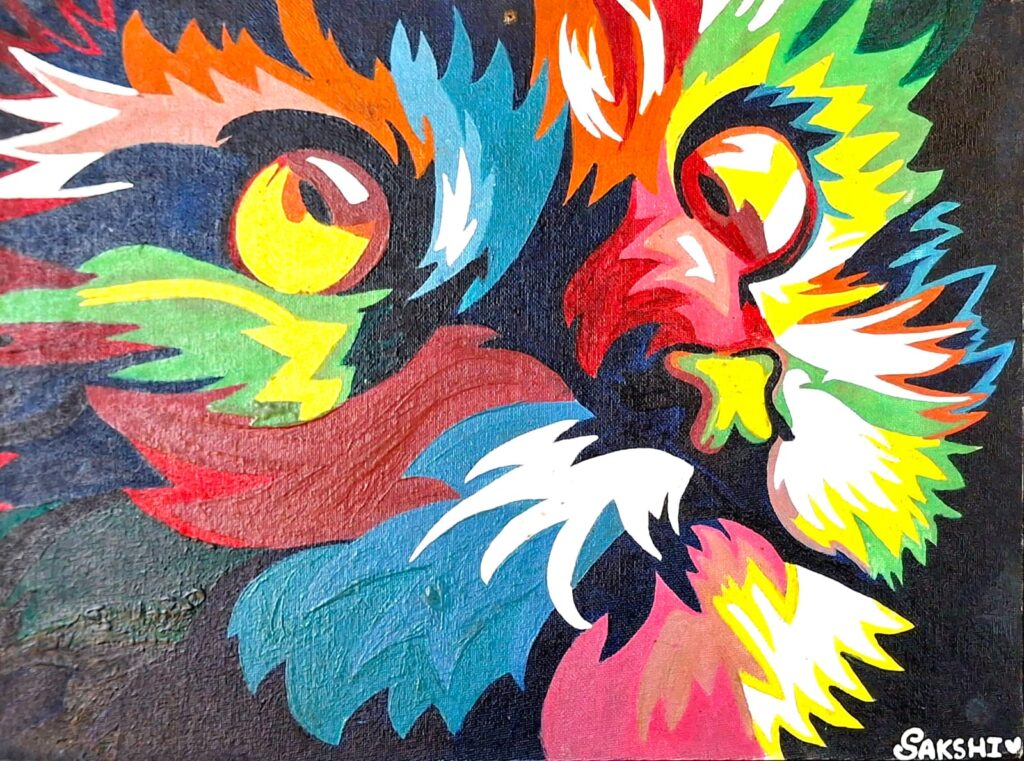
Abstract animal art painting is not about copying how an animal looks—it’s about capturing its energy, emotion, and spirit using colors, shapes, and movement. Abstract art focuses on expressing ideas and emotions rather than realistic representation, allowing artists complete creative freedom.
Whether you’re a beginner or an art student, animal-inspired abstract painting is a powerful way to explore creativity without limits.
In this post, I’ll walk you through how to paint abstract art inspired by animals, step by step, using simple techniques and creative freedom.
Why Choose Animals as Inspiration for Abstract animal Art painting?
Animals naturally represent strength, emotion, instinct, and movement. When painted abstractly, they allow artists to:
- Express feelings instead of details
- Use bold and experimental colors
- Break realism rules
- Create visually powerful artwork
Abstract animal art often feels more expressive because it focuses on what the animal represents, not how it looks.
Step 1: Choose an Animal and Its Emotion
Start by selecting an animal that connects with a feeling:
- Lion → power, confidence
- Wolf → freedom, mystery
- Bird → hope, movement
- Tiger → intensity, courage
Instead of sketching details, ask yourself:
What emotion does this animal give me?
That emotion will guide your colors and brush strokes.
Step 2: Select a Bold Color Palette
Abstract art focuses on expressing ideas and emotions rather than realistic representation, allowing artists complete creative freedom.Abstract art focuses on expressing ideas and emotions rather than realistic representation, allowing artists complete creative freedom.
- Red, orange → energy, passion
- Blue, green → calm, depth
- Yellow → intensity, focus
- Black backgrounds → drama and contrast
Tip: Dark backgrounds help bright colors stand out strongly, especially in abstract animal paintings.
Step 3: Sketch Basic Shapes (Optional)
Lightly sketch:
- The face direction
- Eye placement
- Major shapes
Keep it loose. No perfection needed. Many artists skip sketching completely and paint directly.
Step 4: Paint with Free, Expressive Strokes
Now comes the fun part:
- Use sharp, angular strokes for aggression or strength
- Use flowing strokes for softness or movement
- Layer colors instead of blending too much
- Let colors overlap naturally
Abstract art grows organically—trust the process.
Step 5: Focus on One Strong Focal Point
In animal-inspired abstract art, the eyes often become the focal point.
- Use contrast
- Add highlights
- Keep the surrounding areas slightly darker
This draws the viewer into the artwork emotionally.
Step 6: Step Back and Refine
Pause and observe your painting:
- Does it express the emotion you wanted?
- Is the balance of colors working?
- Does the artwork feel alive?
Add highlights, dark edges, or texture where needed—but don’t overwork it.
Common Mistakes to Avoid
❌ Over-detailing
❌ Trying to make it realistic
❌ Using too many similar colors
❌ Not trusting your instincts
Remember: Abstract art is about feeling first, form later.
Final Thought
Painting abstract art inspired by animals is a beautiful mix of emotion, freedom, and storytelling. There are no rules—only expression. Each artwork becomes a reflection of how you feel, not how the animal looks.
If you’re a beginner, start bold, stay loose, and enjoy the journey and share with us.
✨More abstract art tutorials, creative guides, and artist experiences are available on theartory — a space where passion turns into skill.